

Delivery Robots Allegedly Scan Customers And Collect Biometric Data, Lawsuits Claim
“Class-action lawsuits accuse Chicago food delivery robot companies of scanning customers' faces and hands without consent, opening up a high-stakes legal showdown over biometric surveillance on city sidewalks.”
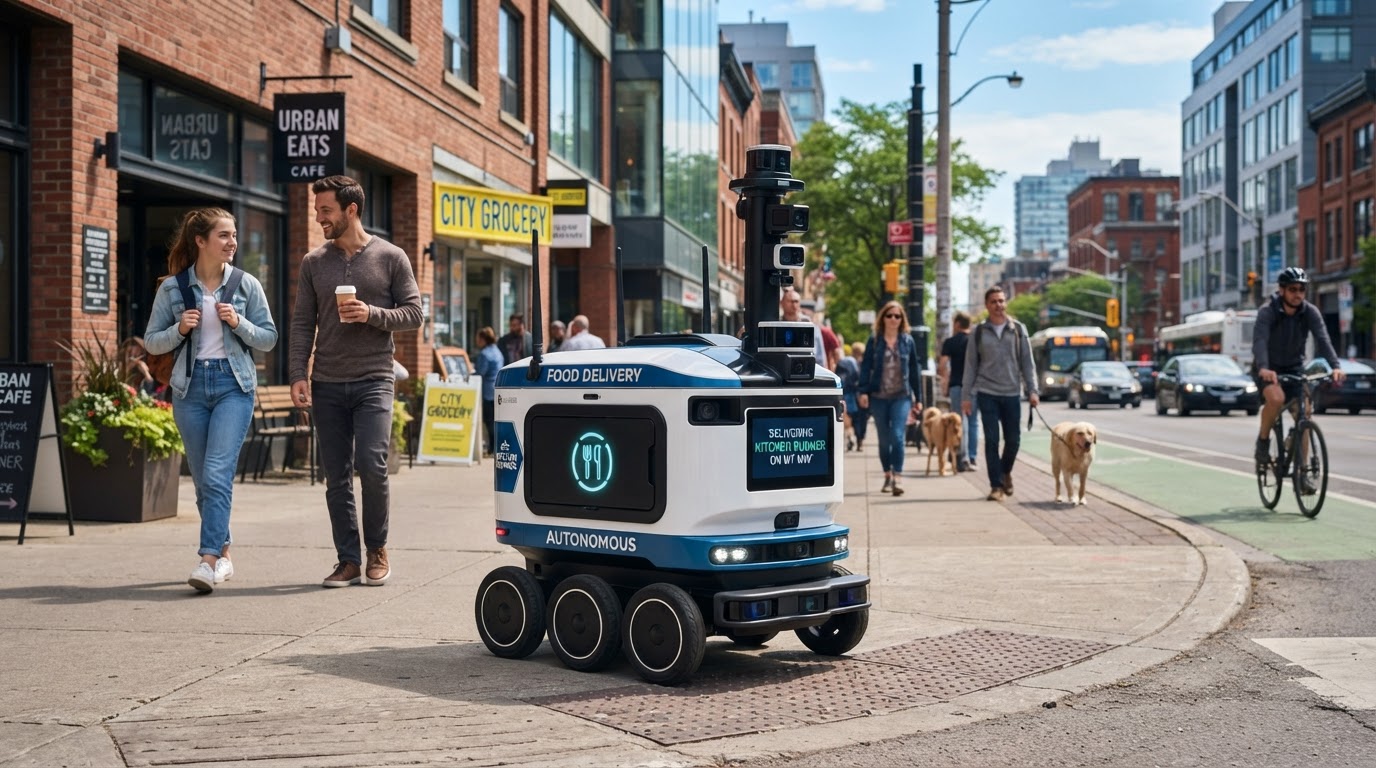
You order dinner on an app, step outside your front door into the evening breeze, and wait for a courier. Instead, an electric cooler on wheels rolls up to your curb, blinking beneath the streetlights. You reach down for your meal — and before you can take the first bite, high-powered sensors and cameras may have already memorized your face, your hands, and your exact doorstep. That is the chilling scenario laid out in a pair of class-action lawsuits filed in Cook County, Illinois, accusing two Chicago delivery robot companies of scanning customers' biometric data without their consent.
Advertisement
The complaints target two major players on Chicago sidewalks: Coco Robotics and Serve Robotics. According to the filings, plaintiffs allege the pint-sized rovers captured facial scans, head geometry, and handprints as customers approached to retrieve food orders, running afoul of the landmark Illinois Biometric Information Privacy Act (BIPA) — widely regarded as the toughest digital privacy law in the nation.
One plaintiff, Mitchell Breidinger of Chicago's Near North Side, detailed an unexpected delivery through DoorDash in September 2025. As he stood beside the Coco unit, cameras and LiDAR sensors mapped his features. His suit alleges that a remote operator monitored the video feed in real time, all without providing prior written notice, obtaining consent, or publishing a formal retention schedule. A second plaintiff, Barry Schain of Lincoln Park, reported three separate surprise robot drops from Serve Robotics, alleging his sensor data and imagery were preserved and fed to third parties for artificial-intelligence training datasets.
Both companies are pushing back hard. A Serve spokesperson told Block Club Chicago that the company will vigorously defend itself, asserting its machines "are not designed to identify individuals or create biometric profiles." Meanwhile, Coco insisted the litigation "fundamentally misunderstands our technology," stressing that its navigational data is strictly geared toward sidewalk safety and avoids recording the start or conclusion of delivery runs. With damages potentially reaching $5,000 per violation and Chicago's pilot program nearing its May 2027 expiration, the battle over where convenience ends and surveillance begins is just getting started.
Stay locked to Vena Soul — Arizona's Hottest R&B — for culture, tech, breaking headlines, and the smoothest sounds on the airwaves.
Keep it locked on Vena Soul for more from the R&B world.
Advertisement